
Ongoing FBA prep for a Nashville-area CPG brand: FNSKU labeling and multipack kitting to Amazon's requirements, bulk inventory stored between shipments, and each shipment built and gone when the brand calls for it — while its storefront, B2B, and marketplace orders ship from the same building.
Amazon FBA Prep
FNSKU labeling, poly bagging, multipacks, carton prep, and palletized shipments from Nashville, TN — every unit prepped to Amazon's requirements, with 80,000 sq ft of temperature-controlled storage behind it. One-time shipments or ongoing programs.
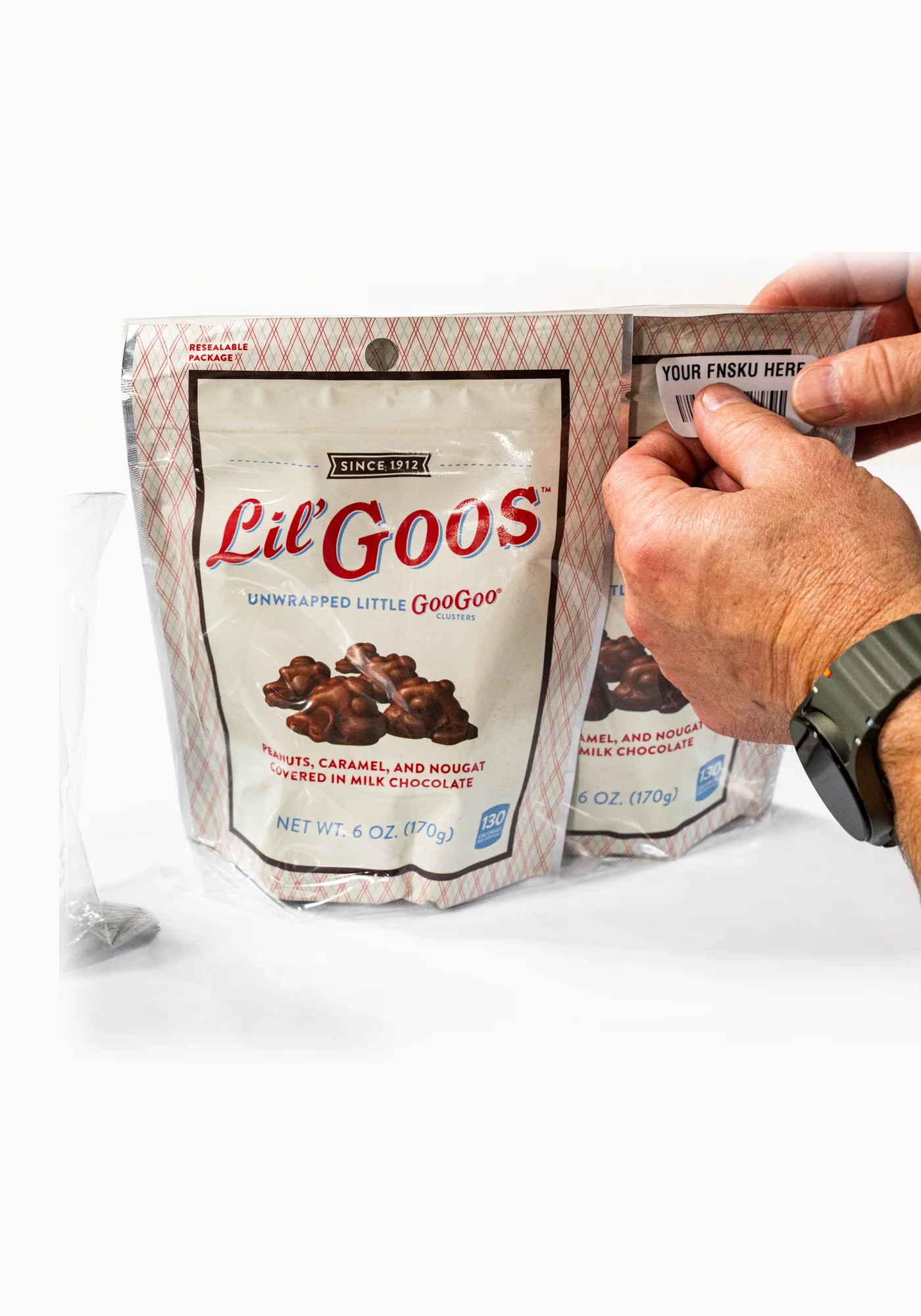
To spec
every unit prepped to Amazon's requirements
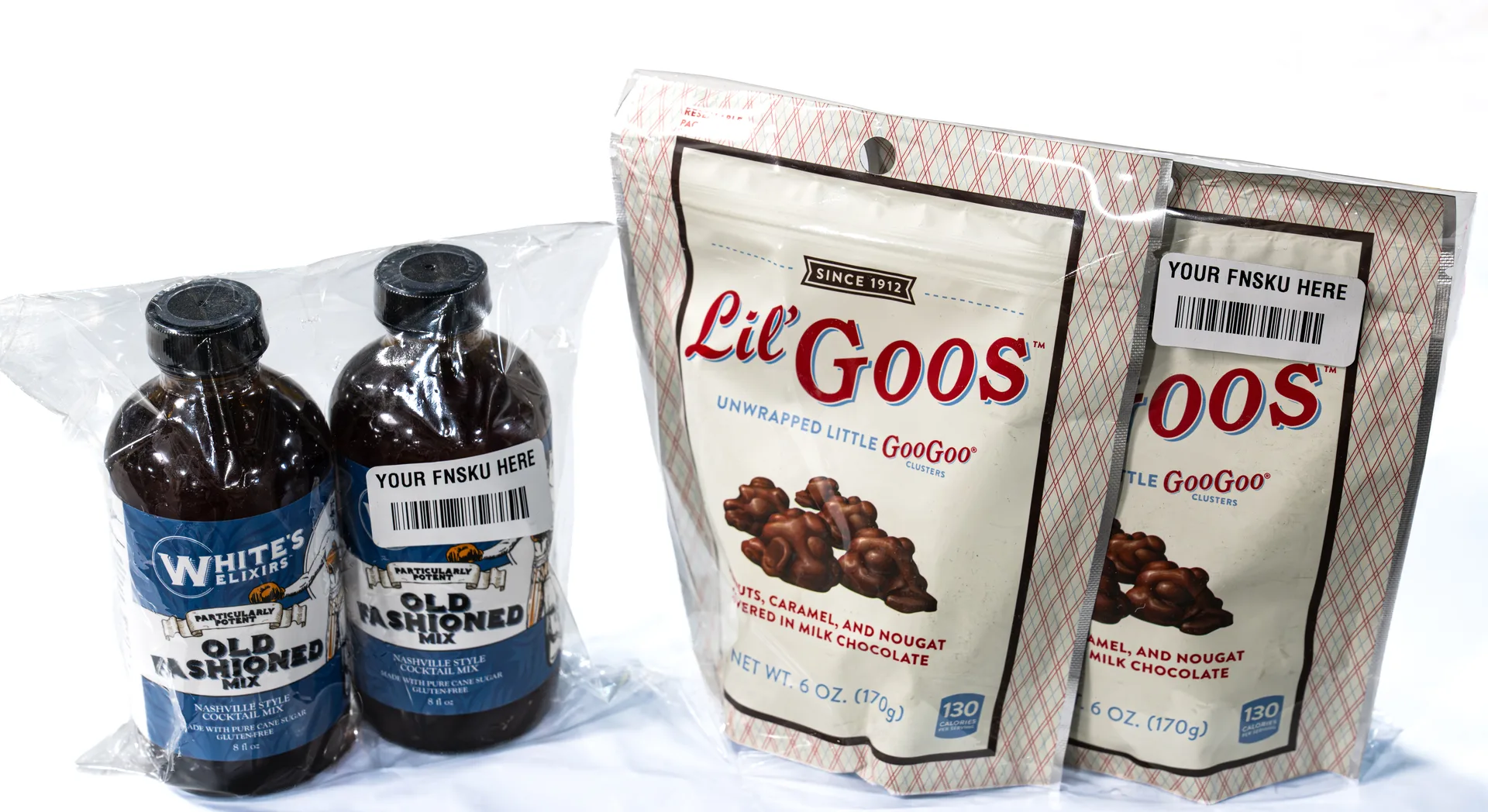
FNSKU
labels printed and applied in-house
80,000 sq ft
temperature-controlled storage between shipments
Both
one-time shipments and ongoing programs
FBA prep, defined.
Selling through FBA means Amazon's warehouses store your inventory and ship your orders — but only after that inventory arrives ready for their network. That's prep: every unit labeled, bagged, and boxed to Amazon's requirements before it leaves for a fulfillment center.
Around here, FBA prep is kitting with Amazon's label on it. It runs in the same kitting area, built by the same kitting team — some of them with more than fifteen years of kitting behind them — and the only difference is that Amazon writes the spec. A crew that builds to exact client spec, week in and week out, treats Amazon's no differently: FNSKU labels printed and applied, units poly bagged, multipacks assembled, cartons packed and palletized, shipment after shipment. You'll sometimes hear multipack work called product bundling. Whatever your team calls it, if it has to arrive at Amazon correct, it leaves here correct.
One boundary worth naming: prep is the inbound side. Once your inventory is in Amazon's network, Amazon ships those customer orders — that's FBA doing its job. The marketplace orders we pick, pack, and ship ourselves live with our Order Fulfillment , along with every other channel you sell through.
On the kitting floor, for Amazon.
Unit by unit
- FNSKU labeling — printed and applied in-house
- Poly bagging and protective packaging
- Expiration and lot dating
- Inspection and rework
Shipment by shipment
- Multipack builds — the kitting team's home ground; see the full kitting range
- Carton prep and case packing
- Palletizing for LTL shipments
- Storage between shipments — bulk stays here, shipments go out as needed
- Removal orders — received back, inspected, handled per your instruction
How a shipment comes together.
Send Amazon what it needs. Keep the rest here.
Prep-only shops prep what shows up and ship it all. We're a warehouse first — so your bulk inventory can live here, racked or floor, in the same 80,000 sq ft of temperature-controlled space as everything else in the building, and go out to Amazon a shipment at a time, whenever you decide it's time.
Everything on hand is recorded in the WMS — Excalibur by Camelot — and visible to your team 24/7 through WebLink View: what's on hand, what's arrived, what's moved out. When the next shipment is due, inventory moves from the racks to the kitting area without a transfer truck — labeled, cartoned, and gone.
Removal orders, received.
Sometimes the right move is bringing inventory back out of Amazon's network. Route a removal order here and it comes back to our dock, gets inspected, and goes where you've decided it goes — back into storage for a future shipment, into rework, or set aside for your call — all recorded in the WMS, so your counts stay true.
One building, no hand-offs.
FBA prep here isn't a separate shop bolted onto the building — it's the kitting team's work, run in the kitting area (Kitting & Assembly ). Bulk storage feeds that floor without a transfer truck (Warehousing & Storage ). And every channel Amazon doesn't ship for you — your storefront, D2C, B2B, subscriptions, and the marketplace orders we fulfill ourselves — runs through Order Fulfillment . Same crew, same WMS, no second receiving.
FBA prep in practice.
Same policy as every page on this site — no names, just the work.
Southern Trading Solutions has been a wonderful partner for our e-commerce and Amazon fulfillment needs. They go above and beyond on customer service and have been genuinely flexible as our business has grown — handling everything from kitting and labeling to D2C order fulfillment with care and consistency.
FBA prep questions, answered.
What does FBA prep include?
Getting your inventory ready to enter Amazon's network: FNSKU labeling, poly bagging and protective packaging, expiration and lot dating, multipack builds, inspection and rework, carton prep and case packing, and palletizing for LTL shipments — every unit prepped to Amazon's requirements for your products.
Do you also fulfill our Amazon orders?
Two different jobs, both in this building. FBA prep gets inventory into Amazon's network — Amazon ships those orders itself. The marketplace orders you fulfill yourself, plus your storefront, B2B, D2C, and subscription channels, we pick, pack, and ship through our Order Fulfillment.
What is FNSKU labeling?
The FNSKU is Amazon's own barcode for your product — it ties each unit to your listing and your account inside their network. We print and apply FNSKU labels unit by unit as part of prep, to Amazon's requirements.
Can you store our inventory between FBA shipments?
Yes — that's half the point of prepping in a working warehouse. Bulk inventory lives here in 80,000 sq ft of temperature-controlled space, recorded in the WMS and visible to you 24/7 through WebLink View, and goes out to Amazon a shipment at a time, on your schedule. Storage works on its own here too — see Warehousing & Storage.
Can you build multipacks and kits for FBA?
Yes — FBA prep here is the kitting team's work, so multipacks and kit builds run in the same kitting area as every other kit we build, and land back in the FBA flow labeled and carton-ready. For the full range of that work, see Kitting & Assembly.
Do you handle removal orders?
Yes — route removals to our dock and we'll receive, inspect, and handle them per your instruction: back into storage for a future shipment, into rework, or set aside for your call, all recorded in the WMS.
Do you have a minimum?
The honest answer is that scale decides it. For a program with real volume — ongoing shipments, or a one-time shipment of some size — the setup is worth it on both sides. For a handful of units, it usually isn't, for either of us. Tell us what you're working with and we'll give you a straight answer.
How does our inventory get to Amazon?
On your shipment plan — small parcel or palletized LTL, routed the way you and Amazon set it. We prep, carton, palletize, and have it dock-ready to match; the freight itself is your call or Amazon's, not ours.
Where are you located?
We're in La Vergne, TN — 0.6 miles from I-24 and about 20 minutes from downtown Nashville — prepping FBA inventory for sellers across Middle Tennessee and beyond.
Tell us what you're sending in.
Products, unit counts, and when the next shipment needs to leave — whatever you know so far. We'll come back with how we'd prep it and what it costs.